

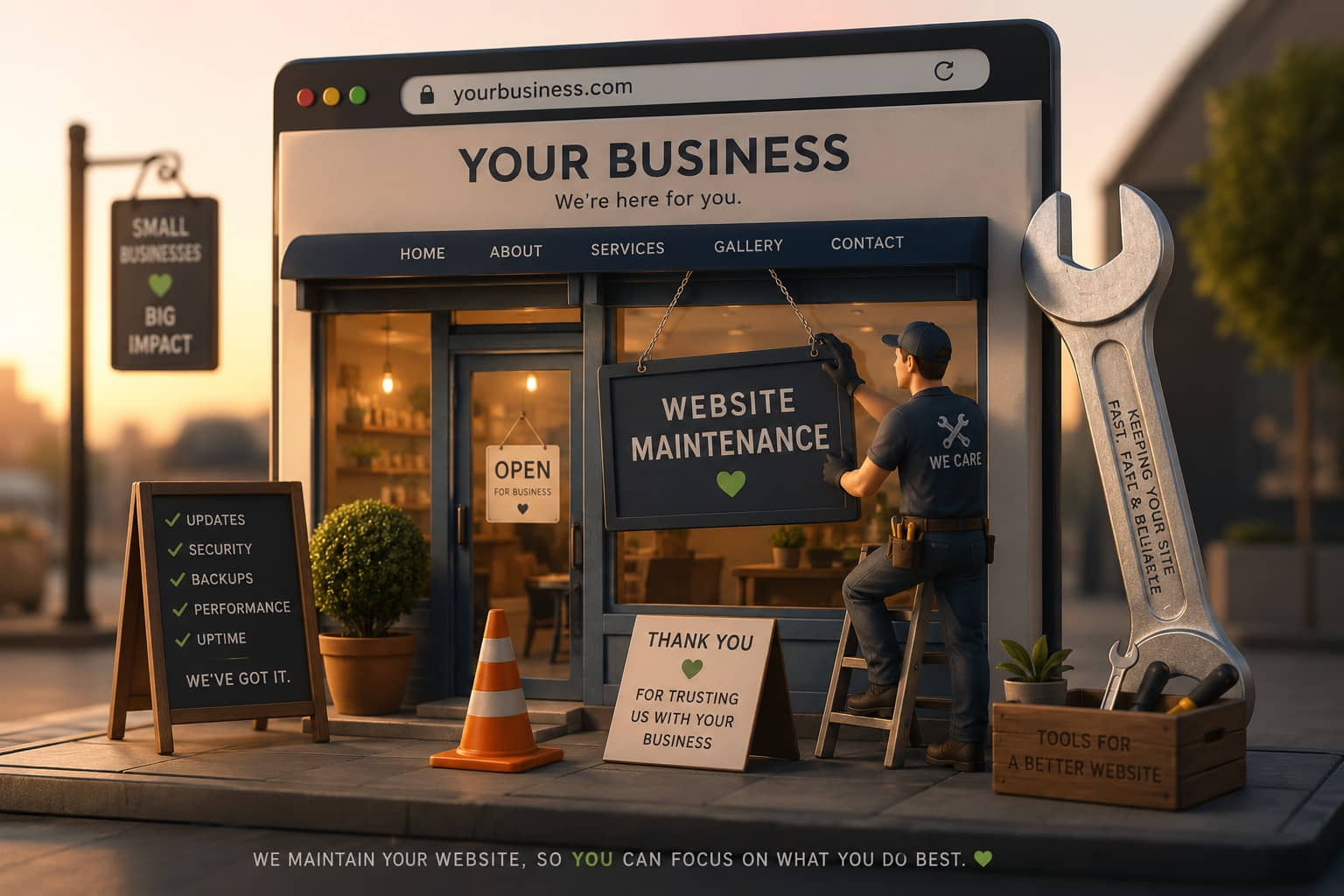
A website rarely causes problems at a convenient time. It breaks on a Friday afternoon, slows down during a busy week, or shows out-of-date information right when a customer is ready to call. That is why the best website support for small business is not just about fixing a site when something goes wrong. It is about having a reliable team that keeps your website working, current, secure, and useful to your business every month.
For most small business owners, the issue is not whether support matters. It is what kind of support actually helps. Plenty of providers will sell you a website build, then disappear once it launches. Others will host your site but leave updates, edits, SEO, and performance to you. That may work if you have time in-house. Most owners do not. They need someone who can handle the practical work without turning every small request into a new invoice.
What the best website support for small business should include
Good website support starts with the basics, but it should not stop there. Hosting, security monitoring, software updates, backups, and uptime checks are essential. If those are missing, you are not really paying for support. You are paying to react to avoidable problems.
The stronger difference comes in what happens after the technical essentials. A small business website is a living sales tool. Prices change, services change, staff change, and customers ask new questions. If your website support plan does not include ongoing edits, content updates, and a clear way to request changes, your website starts ageing the moment it goes live.
That is where many businesses get stuck. A cheap host is not the same as hands-on support. A freelancer who built your site may be excellent at design but slow to reply three months later. A larger agency may be capable, but every revision can feel like it needs a meeting, a quote, and a waiting period. The best support tends to sit somewhere else - managed, responsive, and built around regular business needs.
Why support matters more than the original website build
Many business owners focus heavily on the launch. That makes sense, because design matters and first impressions matter. But over time, support has a bigger effect on results than the initial build.
A well-designed website with no maintenance can become a liability fast. Plugins go out of date, contact forms stop sending, pages load more slowly, and security issues creep in. Even if nothing dramatic happens, the website can slowly stop reflecting the business. Old testimonials, old opening hours, old service pages - those things chip away at trust.
By contrast, a site with solid ongoing support keeps improving. It stays aligned with your current services, it remains faster and safer, and it can be adjusted as your marketing changes. That is often what separates a website that simply exists from one that keeps bringing in leads.
Signs your current support is not good enough
If you are waiting days for simple edits, your support is too slow. If you are nervous about making changes because every update costs extra (we don't charge for support), your support model is too rigid. If you have no idea whether your site is secure, backed up, or performing properly, then you do not really have support - you have a website sitting online and hoping for the best.
Another common warning sign is confusion. Small business owners should not need to translate technical jargon just to understand what is being done on their site. Good support feels clear. You know what is included, how to ask for help, and what happens next.
Cost surprises are another issue. One of the biggest frustrations with traditional web services is that the build fee is only the start. Then come charges for updates, fixes, content changes, plugin renewals, emergency repairs, and support time. Predictable monthly pricing for websites often works better for smaller businesses because it turns website management into an operating cost rather than a string of unexpected bills.
The trade-offs between freelancers, agencies, and managed support
There is no single model that suits every business. A freelancer can be a good fit if you need a one-off brochure site and do not expect frequent changes. You may get a more personal experience, and sometimes lower upfront cost. The downside is capacity. If they are busy, away, or no longer offering support, your website becomes your problem.
Agencies usually bring broader skills and process, which can help on larger projects. But many small businesses find them too expensive or too layered for everyday needs. When you just want a page updated, a photo swapped, or a contact form checked, you do not want to feel like you are entering a project pipeline.
Managed website support is often the best fit for service businesses that need continuity. It combines the practical side of hosting and maintenance with ongoing updates and a clear support relationship. You are not buying a website once and then scrambling to maintain it. You are paying for someone to keep the whole thing moving.
How to judge the best website support for small business
Start with responsiveness. Ask how updates are requested and how quickly typical changes are handled. If the answer is vague, that usually tells you enough.
Then look at scope. Does support include hosting, security, backups, software updates, and performance checks? Does it also include content edits, design tweaks, and help improving pages over time? A narrow support package may look affordable until you discover that the things you actually need are not included.
Transparency matters just as much. You should know what you are paying each month, what happens if your site has a problem, and whether you can request revisions without being charged every time. For many small businesses, the best support is not the cheapest line item. It is the one that removes the most friction.
It also helps to choose a provider that understands small-business priorities. You do not need endless technical reports with no practical meaning. You need to know whether the website is healthy, whether it is helping people find you, and what improvements make sense next.
Support should help you grow, not just keep the lights on
There is a difference between maintenance and support with business value. Maintenance keeps your website alive. Useful support helps it perform better.
That might mean improving page speed, refining service pages for search visibility, adding stronger calls to action, updating images, or tracking what pages are generating leads. These are not dramatic rebuilds. They are steady improvements that make the site more effective.
For local businesses in particular, this matters a lot. A plumber, dentist, landscaper, clinic, or home service company does not need a flashy digital strategy deck. They need a website that loads quickly, looks trustworthy, answers common questions, and makes it easy for people to get in touch. Support should keep those basics sharp.
Why monthly support often beats pay-as-you-go
Pay-as-you-go sounds flexible until you start delaying updates to avoid the fee. Then broken links stay broken, new services never get added, and old content hangs around too long. Monthly support changes that behaviour. When updates are part of the service, businesses are more likely to keep the site fresh.
It also reduces hesitation. You should not have to wonder whether changing a headline or adding a new review is worth the cost. Small improvements add up, but only if they actually get done.
That is one reason subscription-based website support has become more appealing to smaller companies. It aligns the provider with the long-term health of the website, rather than treating every request as a separate sale. For busy owners, that is usually simpler and far less stressful.
A managed service like CitrusKiwi fits that model well because it combines design, development, hosting, updates, maintenance, and ongoing support into one practical monthly setup. For a small business that wants the website handled properly without agency-style complexity, that can be a much better fit than piecing services together.
Choosing support that matches how your business actually runs
The best provider for your business is the one that fits your pace, your budget, and the amount of help you really need. If your website rarely changes and you are comfortable handling basic updates, a lighter service may be enough. If your site is central to lead generation and you want someone else managing the details, you need more than hosting and emergency fixes.
Look for a partner who treats your website like an active part of your business, not a finished file from last year. Ask simple questions. How are edits handled? What is included? Who monitors security? How often is performance reviewed? What happens if something breaks? Clear answers now usually mean fewer headaches later.
A good support service gives you room to focus on the work you actually get paid for. Your website should not become another task sitting on your list for months. It should be one of the few parts of the business that quietly works in the background, stays up to date, and keeps bringing the right people through the door.
If that is the outcome you want, the best choice is rarely the provider with the flashiest pitch. It is the one that makes website ownership feel simple.